


Relax on the refuge
In order to truly appreciate the delicate balance of nature along the Creole Nature Trail, one should visit at least one of the four national or state wildlife refuges. Cameron Prairie National Wildlife Refuge was established in 1988 and supports one of the largest concentrations of wintering waterfowl of any refuge in the National Wildlife Refuge (NWR) System. Cameron Prairie NWR was the first refuge established under the North American Waterfowl Management Plan, which is a treaty between the United States, Mexico and Canada. One may also visit Lacassine National Wildlife Refuge. Lacassine was established in 1937 in order to preserve a portion of the vast marshlands of Louisiana, as well as provide a habitat for large numbers of migrating waterfowl. Another wonderful refuge is the Rockefeller State Wildlife Refuge, which has one of the largest alligator populations in the country and is a major alligator research center. Much of the research that has told us what we know about alligators was performed at the Rockefeller Wildlife Refuge. Sabine National Wildlife Refuge contains 125,000 acres of marshland, one may see alligators, coyote, waterfowl and nutria (a large aquatic South American rodent with webbed feet and a long tail). Louisiana's wildlife refuges more than meet the needs of those who enjoy outdoor experiences and activities, but, most importantly, the refuges along the Creole Nature Trail provide a living environment for thousands of creatures and showcase just how important these environments are to the entire North American ecosystem.
Creole Nature Trail - some kind of wonderful
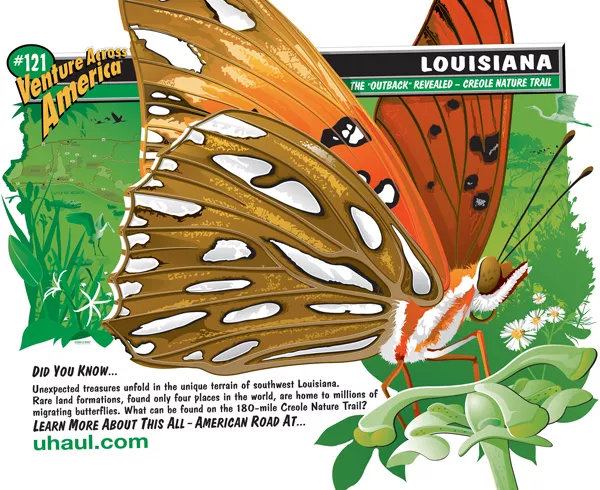
Comprising 180 miles of adventure, nature, culture and outback beauty, the Creole Nature Trail provides "some kind of wonderful" for all who visit. According to the Southwest Louisiana Convention and Visitors Bureau, the Creole Nature Trail All-American Road exemplifies not only the area's rich culture and beauty, but its history as well. Along the Creole Nature Trail, one can find traces of the Civil War as well as archaeological dig sites. And that back in the late 1800s, miners discovered sulfur in the town in which the Creole Nature Trail begins, Sulphur, La. Before starting out on the trail, one may visit the Henning Cultural Center, an early 20th Century home, which was converted into a gallery with rotating exhibits. Remember, always keep your eyes peeled for Lafitte's treasure along the nature trail.
For those who like to swim, sunbathe and fish, the Creole Nature Trail is the place to be. The trail allows access to a public oyster reef in Calcasieu Lake, which is one of the state's few public oyster beds, and stopping along the road to go shrimping or crabbing are time-honored activities. If you like to photograph wildlife or are a bird lover, the four different wildlife refuges or the bird and butterfly sanctuary are ideal spots to visit. Driving the entire Creole Nature Trail takes about 8 hours; however, the most popular route can be completed in fewer than five hours. When visiting the Creole Nature Trail, be sure to allow plenty of time to enjoy all that the trail has to offer, and perhaps even plan to stay in the cabins and campgrounds near the trail, enjoying the sunset.
Contraband days
According to legend, Lafitte's favorite hideout was Contraband Bayou in Lake Charles. Established in 1958 to celebrate this history and rumors of buried treasure, Contraband Days Pirate Festival is one of Louisiana's largest and oldest festivals. With over 100 events and more than 200,000 people attending, it is a celebration of fun. The first two weeks in May are spent commemorating the legend of Jean Lafitte and his band of pirates who once sailed the waterways. Twelve days are spent enjoying festivities, games, contests, fireworks, live music and carnival rides. All these activities, mixed with Cajun food, turns out to be some great family fun. Lafitte's celebrated legend is Louisiana's second longest festival. Learn more about this fun-filled extravaganza at www.louisianapiratefestival.com.