
Northern Lights
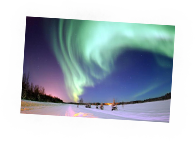
If you are in the North and you look into the night sky, you might be lucky enough to see an amazing light show known as the northern lights, or the aurora borealis. In the Southern Hemisphere, below the equator, the lights are much less visible. These lights are known as the aurora australis. The best places to see the colorful lights dance across the sky are in the northern United States and Canada. The Northwest Territories offer some of the best views in the whole Northern Hemisphere!
The colorful lights include almost all colors such as deep purples, neon greens, bright yellows and orange-reds. Sometimes they even appear to glow with white light. The colors move and pulse across the sky and many people think they are as beautiful as fireworks, sunsets and lightning storms. It is difficult to describe with words how vivid and radiant the colors appear in the night sky and how the lights appear to dance and sway. Take a look at our Related Links section for more photos.
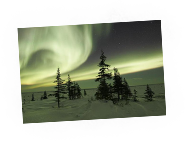
The colorful lights are named for Aurora, the Roman goddess of dawn. Ancient people were in awe of the northern lights. But they did not understand what the lights were or if they had powers of good or evil. All over the world many different cultures had many different theories and explanations for the lights. Some cultures thought they were rings of fire that surrounded a flat Earth. Others thought that the lights were the playful spirits of children. An ancient Norse myth held that the northern lights were trembling bridges across the sky over which the gods of mythology could travel between the two worlds of heaven and Earth.
Scientists still study the northern lights and continue to learn more. But they do know they are not rings of fire, the spirits of children or bridges across the sky! The northern and southern lights are two of several astronomical phenomena called >polar lights (aurora polaris), which appear as shafts or curtains of colored lights. They can be seen in the night sky anywhere in the world at any time of year. However, they are more often seen closer to the poles at the northern latitudes and in the spring and fall seasons. They are caused when charged particles (protons and electrons) collide with the Earth's upper atmosphere.
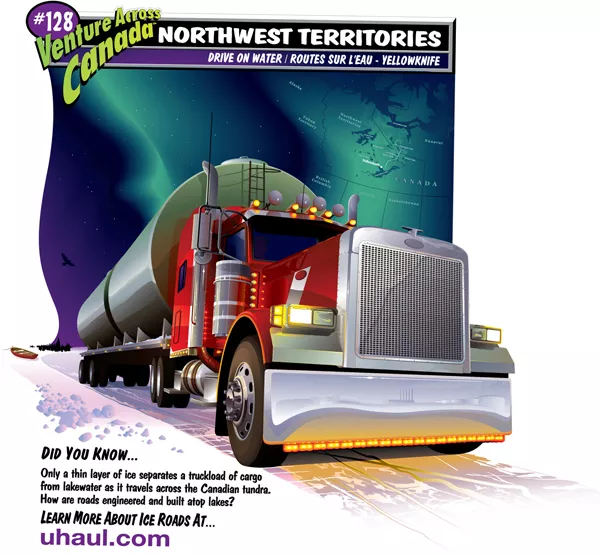
The people who live and work in the Northwest Territories consider themselves lucky to regularly view the spectacular light shows of the northern lights. The drivers on the ice roads comment that the views of the northern lights during their long stretches of drive time, are often their favorite parts of the trip.
"The pay is great," they say. "But a real bonus for driving the ice roads? That would be seeing the northern lights."