

Moonwalk wonder
Imagine walking on the moon in the not-so-distant future. After Neil Armstrong and Edwin "Buzz" Aldrin landed on the moon in 1969, the possibility of everyone "moonwalking" became a possibility as opposed to an unattainable dream. The question arose among scientists and astronomers, "Could we really live in space?" This particular question really gave people something to think about. Scientists pondered what they would need to find or perhaps create in that environment in order to be able to sustain life. One of the first answers put forth was H2O - WATER.
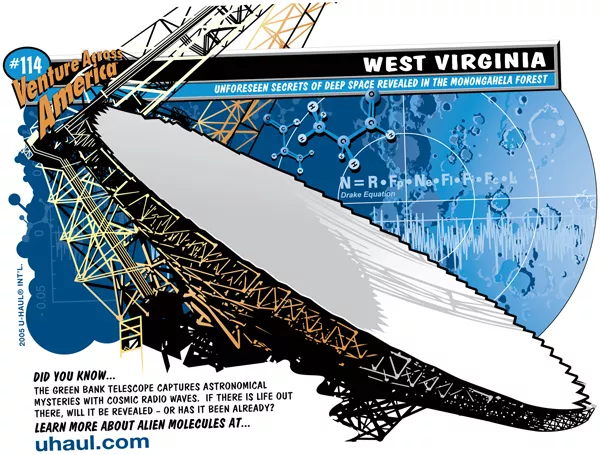
For the past four decades, astronomers and futurologists have believed that ice could exist on the moon, deep within its shadowed poles. Astronomers know that most of the moon's surface is exposed to the sun over the course of a month; however, craters formed near the poles can have floors that are never exposed to the sunlight. These craters may never be exposed to sunlight, even over hundreds of millions of years and could possibly contain frozen deposits of water. In what has become the most detailed radar study to date, scientist Bruce Campbell and colleagues at Cornell University are out to determine if lunar craters do contain ice. Using the Robert C. Byrd Green Bank Telescope in Green Bank, West Virginia, as well as the Arecibo Telescope in Puerto Rico to produce radar maps of the lunar poles, Bruce Campbell and colleagues were able to probe the dark craters as deep as 20 feet, farther toward the crater's floors than ever before.
Despite the fact that ice was detected by two spacecraft that orbited the moon almost eight years earlier, Campbell and colleagues were unable to detect evidence indicating ice. While they were unable to find ice slabs, they did not rule out the existence of some sort of water. Findings were that if there is any ice, it must be distributed as small grains, scattered crystals or thin layers within the dust, making it less useful to future lunar explorers. Research indicates that if scientists are able to find widely dispersed ice in some form, lunar colonists will need to have the proper equipment to work with it, something to sort ice particles from the soil or heat up the crater floors and collect the water vapor; however, experts such as Alan Binder, director of the Lunar Research Institute in Tucson, Arizona, say that it will take a human or a robot to finally determine whether or not ice exists.
"It certainly would have been nice to find some sort of lunar skating rink, or thick layers of ice, but it looks like it is just not there," said Campbell, who works for the Smithsonian Institution's Center for Earth and Planetary Studies.
Supernovas, black holes and lunar life
The National Radio Astronomy Observatory poses the question, "Why do astronomy?" The NRAO has proved that astronomy is one tool for unlocking knowledge, has been a cornerstone of technological progress throughout history, has much to contribute in the future, and offers all people a fundamental sense of our place in an unimaginably vast and exciting universe. Telescopes such as the Robert C. Byrd Green Bank Telescope help us work toward answering the unanswerable and discovering the unimaginable. We may never know whether or not we share the universe with the types of extraterrestrials Hollywood portrays, or if we will one day be living on the moon. However, with talented astronomers from the NRAO and all over the globe, as well as the SETI scientists using the Robert C. Byrd Green Bank Telescope, answers may be just a radio wave away.