
Ice Age Giants
While intercontinental exchange from Asia to North America by prehistoric humans via the Bering Land Bridge was happening as recently as 11,000 years ago, it was the ice age giant mammals that truly made Beringia an ancient crossroads. While some of the ice age giants did not migrate across the land bridge into Asia, many did reach Beringia after migrating north to present day Alaska and Yukon from the continental United States. Some ice age giants who migrated into parts of Beringia are the short-faced bear (the ice age's largest land predator) the scimitar cat (the lion-sized meateater known as one of Beringia's most ferocious predators) and the mastodon, another one of the largest mammals alive during the ice age. All of these and more migrated north and reached the eastern part of Beringia, leaving behind their very own migration mysteries.
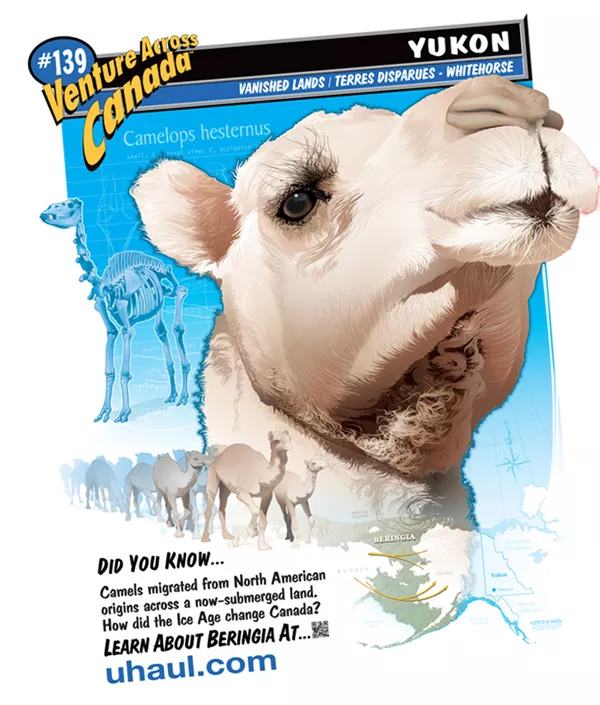
One migration mystery revealed is that of the ice American mastodon. The ancestral mastodon family originated in North Africa 35 million years ago, migrated to Eurasia 20 million years ago and entered North America via the Bering Land Bridge 15 million years ago. 125,000 years ago, the ice age American mastodon migrated throughout North America, ranging from Yukon to Alaska and all the way down to central Mexico. The cousins of mastadons, the mammoths, also have histories tied to migrations across the Bering Land Bridge. The steppe mammoth (ancestor of the wooly mammoth which lived as long as a million years ago) originated in north-central Eurasia then migrated via the Bering Land Bridge to North America. But just as ice age animals were migrating to North America from Asia, some also were traveling from North America to Asia. For example, the woolly mammoth evolved in North America around 300,000 years ago and then migrated across the Bering Land Bridge to populate Eurasia. Ancient horses are another example of migration across Beringia, originating in North America around 35 million years ago and continuing to evolve throughout North America until about 11,000 years ago, before disappearing entirely. However, before the disappearance, some horses did migrate across the Bering Land Bridge into Asia. It wasn't until the Spanish conquistadors brought them back from Europe to the New World via sailing ships that they were reintroduced to North America in the late 1500s. Migrations in the opposite direction, such as that of the horses and camels, created migration mysteries left to be solved by future generations.