

It's a mating thing
The best time to witness these medical marvels is when they come to the shores of Delaware Bay in the late spring (May or June) to spawn. They usually surface to spawn at night or when there is lower light, like at dusk or dawn. However, high surf and weather conditions sometimes prevent the horseshoe crab from spawning.
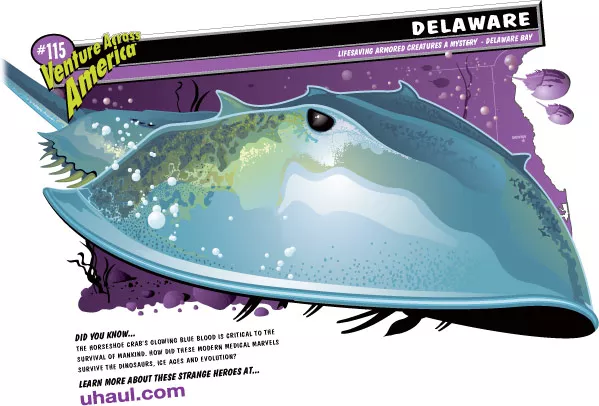
When the beach is safe, the male horseshoe crab comes to the shore first and waits for his leading lady to arrive. As she approaches the waters edge, the male uses two special pincers, called pedipalps, (located on his first pair of walking legs) to latch onto the female's abdomen. Once the female has reached the water's edge, she begins to create approximately seven to eight holes in the sand, moving up the beach as the tide rises. She then deposits and buries an astonishing 4,000 eggs in each hole. That is 32,000 eggs at one time! The attached male, and other males that have come to the shore, begin to fertilize the pastel green eggs as the female lays them.
These eggs are a crucial source of protein for hundreds of thousands of shorebirds. They make their way from South America to the shores of Delaware Bay at the same time as the horseshoe crab spawns. These shorebirds, such as red knots, dulins, ruddy turnstones, sandlerings, semipalmated sandpipers and other migratory shorebirds, can eat over a 1,000 eggs in one day. These eggs provide enough energy for these shorebirds to make the long flight to their Arctic nesting grounds and they can even double and triple their weight on these protein-rich eggs.
The eggs that manage to escape the shorebirds ravenous appetite hatch in approximately two weeks. These newly hatched larvae, which look just like that of an adult horseshoe crab but without the telson, escape the beach and swim for six days before settling to the bottom. Over the next 10 years or so, through a process called molting, they will shed their shells, emerging at each molt with a soft shell that expands to a larger size before hardening. Horseshoe crabs reach maturity after about 18 molts and grow to be about 11 inches wide, with the females becoming larger than the males. The largest ever seen was 17 inches wide!