

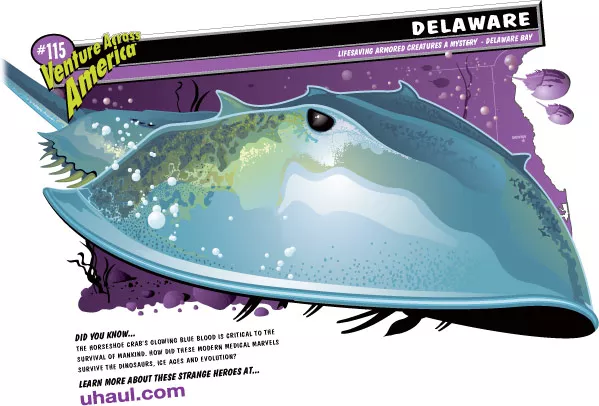
Saving the horseshoe crab
People are recognizing the great need to save these little miracle workers. Many government agencies, scientists and fishermen are dedicating themselves to the protection and preservation of these precious living fossils, and the shorebirds that rely on them for food.
Dr. Nancy Targett, a marine biologist and associate dean at the University of Delaware Graduate School of Marine Studies, has been working tirelessly . through biochemistry . to minimize fishing pressure on the horseshoe crab. Thanks to some remarkable molecular detective work, she recently identified the compound in horseshoe crabs that makes them so irresistible to eels and conch. Scientists are now working to incorporate the compound into an artificial bait for testing by local fishermen.
"Our goal is to develop an artificial horseshoe crab bait that will work as well as the traditional one," stated Targett. "The result should be a win-win situation for fishermen and the horseshoe crab, resulting in more horseshoe crabs for spawning and sustainable uses in medicine."
In addition, outreach specialists at the University of Delaware Sea Grant College Program have spearheaded a number efforts to educate the public about the horseshoe crab. Thanks to public forum, to setting research and management priorities, and making public-service announcements in the program's long running SeaTalk radio series, efforts are beginning to pay off.
The Atlantic States Fisheries Commission enacted horseshoe crab harvesting-control measures for fishermen in Delaware, New Jersey, Maryland and Virginia. The U.S. Department of Commerce has created a 1,500 square-mile horseshoe crab preserve in federal waters to protect them. This sanctuary is positioned just 30 miles into the Atlantic Ocean, extending from Peck's Beach, New Jersey, to Ocean City, Maryland. This area was chosen because it has the largest horseshoe crab population on the East Coast, and hopefully, thanks to the efforts of people like you, this area will provide safe haven for horseshoe crabs for years to come.