

Medical marvels and other uses
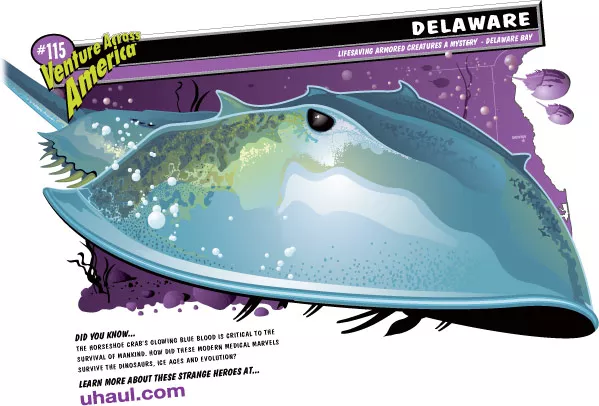
The horseshoe crab has mysterious glowing, blue, copper-based blood that contains a clotting agent. This clotting agent is used to detect diseases such as spinal meningitis and to check for bacterial contamination in prescription drugs and even in prosthetics such as heart valves and hip replacements.
In addition, most of what we know about our eye is the result of studies done since the 1960s on the large compound eyes of the horseshoe crab.
The horseshoe crab also helps us heal and reduce pain. Chitin, a cellulose-like component of their shells, speeds healing time by 50 percent and is used in dressings for burns, wounds and skin graphs. Chitin sutures can be absorbed by the body, which reduces pain when compared to standard treatments because the dressings don't need to be removed.
Horseshoe crabs were also essential to early Native Americans. The meat near the tail of the crabs served as an important food source. They used the shell to bail water from their canoes and the tails as tips for their fishing spears. They even showed the earlier settlers that dead horseshoe crabs make excellent fertilizer for their crops.
The Delaware Bay horseshoe crab is the single most-studied invertebrate animal in the world, and research on their blood aiding our immune system is currently under way. There have been three Nobel Prizes awarded for research conducted on the horseshoe crab. Breakthroughs with the crab have been published in national media and medical journals throughout the years. The Ecological Research & Development Group Inc., the University of Delaware and the National Oceanic and Atmospheric Administration (NOAA) both publish findings about the crab and maintain a Web site, www.horseshoecrab.org.