Moving Container Sizes: How to Choose the Right Option
Last Updated:
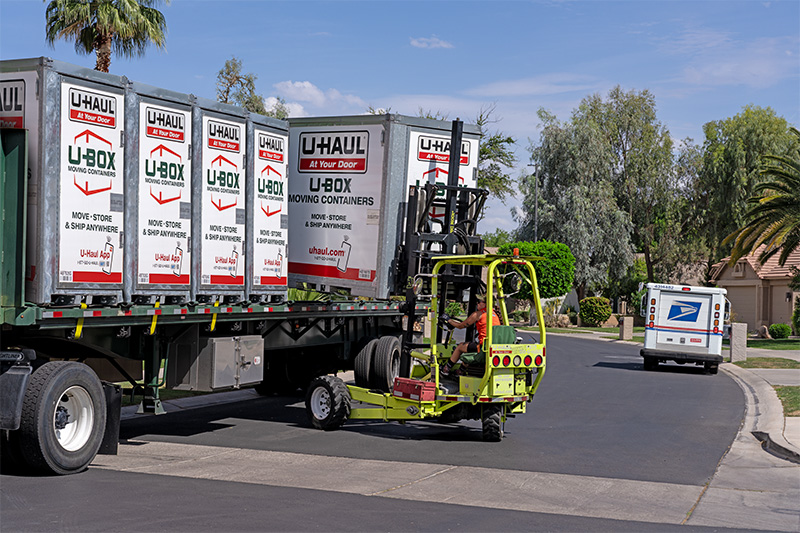
When comparing moving container sizes, bigger isn’t always better. One large moving container gives you a single open loading area, while several smaller containers let you add space one container at a time.
With U-Box® containers, you can reserve one for a smaller load or combine several for a larger household move. That makes it easier to choose the amount of space that works for your belongings, instead of jumping to a container that may be larger than you need.
Key Takeaways
- U-Box® containers let you scale your moving space. Reserve the number of containers you expect to need and add space one container at a time instead of moving up to one much larger container.
- You only pay for the U-Box containers you use. If you reserve an extra container and leave it unused, U-Haul will refund you for that unused container.
- Smaller containers can make space and placement easier to manage. Each U-Box container provides approximately 257 cubic feet of space, holds about 1.5 rooms of household goods, and two containers can fit in a standard parking space.
Bigger Doesn’t Always Mean Better: The Advantage of Scalable Moving Containers
It is easy to assume that the biggest available container is the safest option. After all, no one wants to run out of space halfway through a move.
But size is only one part of the decision. A larger container may leave you with extra room you don’t use, but because you pay by the container, you still pay for that unused space. You’ll also need enough room to place the container at your home.
Before choosing a moving container, think about:
- How much usable space you’re getting
- Whether you can add another container if needed
- Where the container can be placed
- What happens if you reserve more space than you use
- Rental, delivery, transportation, and storage costs
A large container can be a good fit when your belongings match its size and you have plenty of placement space. Smaller containers offer more flexibility, but requesting an additional delivery later will cost extra.
With U-Box containers, you can avoid that added delivery cost by reserving an extra container with your initial order. When U-Haul picks up your loaded containers, any unused container is refunded.
The question isn’t only, “Which container is bigger?” It’s also, “Which option gives me the right amount of space for my move?”
What Does a Scalable Moving Container Mean?
“Scalable” means you can adjust the amount of space based on what you need, and this flexibility is a standout feature of U-Box containers.
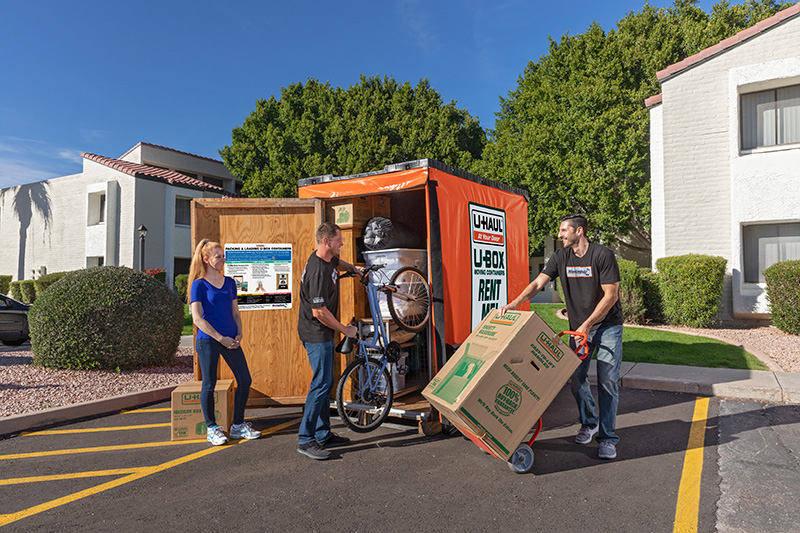
Think of each container as a building block. You can reserve an extra container with your initial order for backup space and avoid paying for another delivery later. If you do not use the extra container, you will not be charged for it. This ability to overestimate without paying for an unused container helps set U-Box apart.
One Container Size Can Still Work for Different Moves
U-Box containers come in one standard size, making it easy to estimate your space in consistent increments. Each container measures about 5 feet wide, 8 feet long, and 7.5 feet high, with approximately 257 cubic feet of interior space.
One container typically holds a room and a half of belongings and can accommodate a standard king-sized mattress.
The smaller footprint can be helpful when you’re moving from an apartment, condo, or smaller home. But U-Box containers aren’t only for small moves. You can combine multiple containers when you need more space.
Here are some general estimates for homes with an average amount of furniture and belongings:
| Home Size | Estimated U-Box Containers |
| Studio | One container |
| One-bedroom home | Two containers |
| Two-bedroom home | Three containers |
| Three-bedroom home | Four containers |
| Four-bedroom home | Six containers |
Your needs may be different depending on how much furniture you have, how large your belongings are, and how you pack. The estimates above are based on the current U-Box space estimator.
Not sure where to start? Use the U-Box container quantity guide to get a better idea of how many containers you may need.
One Large Container vs. Multiple Smaller Containers
One large container and several smaller containers can both give you plenty of moving space. The main difference is how that space is divided.
|
Consideration
|
One 16 ft. Container
|
Multiple Smaller Containers
|
|
Adding space
|
One open space for your belongings
|
Add space one container at a time
|
|
Matching your belongings
|
You may end up with more space than you need
|
Choose the number of containers that works for your move
|
|
Getting more room
|
You may need to reserve another large container
|
Reserve another U-Box container if needed
|
|
Staying organized
|
All your belongings share one space
|
Separate belongings by room or purpose
|
|
Placement
|
Larger footprint and more delivery clearance, which can be difficult on tight streets
|
The smaller footprint may offer more placement options
|
|
Unused space
|
Any extra space remains unused inside the container, but you still pay for it as part of the container price
|
You’ll receive a refund for any unused U-Box containers |
Neither approach is automatically right for every move. If your belongings fit neatly inside one large container and you have room to place it near your home, then that might be the easiest option for you.
Smaller containers can be especially helpful when your belongings fall between the sizes offered by other container systems. Instead of moving up to the next large size, you can add space in a smaller step.
What Happens When Your Belongings Fall Between Sizes?
With smaller containers, you don’t have to make such a big jump. You can add one container at a time until you have the exact room you need.
Let’s say one large container isn’t quite enough, but renting a second large container would give you much more space than you need.
That can make it easier to match your reserved space to your actual belongings, without paying for a large amount of empty room.
Multiple Containers Can Help Organize a Larger Move
Having more than one container can also help you stay organized.
You could divide your containers by:
- Room
- Family member
- Floor of your new home
- Items going into storage
- Items you’ll need right away
- Heavy furniture versus smaller packed belongings
For example, you might put beds, basic kitchen supplies, and first-night essentials in one container, while furniture and belongings you won’t need right away can go in another.
That way, each container becomes its own organized section of your move. You’ll have a better idea of where everything is when it’s time to unpack.
Reserve a Little Extra and Pay for What You Use
Figuring out exactly how much space you’ll need can be tricky, especially before you begin loading.
If you know you’ll need four U-Box containers, but might need five, you can reserve the extra container for a little breathing room. If you don’t use it, you won’t be charged for it.
This gives you a backup plan without making you pay for a container you never used. It can also make moving day feel a little less stressful because you’ll know extra room is available if you need it.
Smaller Containers Can Offer Placement Flexibility
Moving container size isn’t only about what fits inside. You also need to consider where the container will go while you load or unload.
A large moving container may be difficult to place if you have a short driveway, limited space around your home, or no private driveway. The smaller footprint of a U-Box container may give you more options.
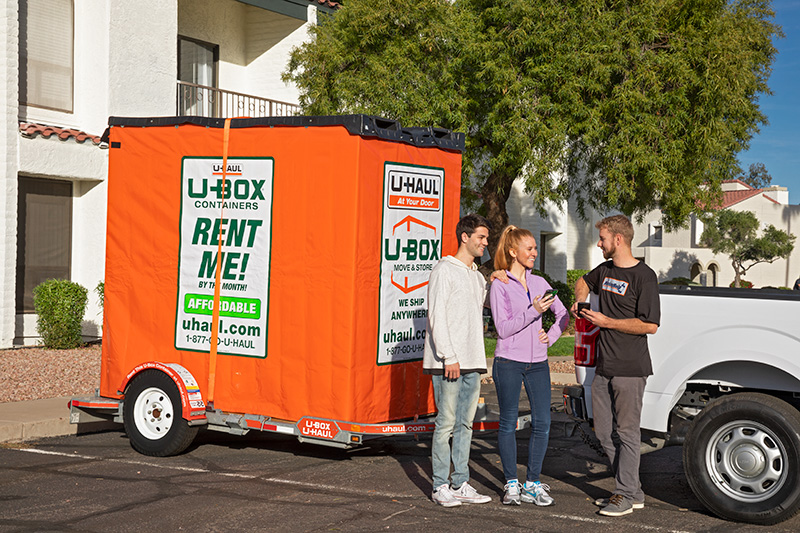
Two U-Box containers can fit within a standard parking space. Containers may be placed on driveways, at permitted curbside locations, or on level surfaces that a forklift can safely access.
This can be helpful for apartments, condos, townhomes, homes with smaller driveways, and properties with limited loading space.
Placement rules can vary, so check with your landlord, property manager, homeowners association, or local municipality before scheduling delivery. You can also compare the available U-Box delivery methods to find an option that works for your location.
How to Choose the Right Moving Container Size
Still deciding between one large container and multiple smaller ones? Ask yourself these questions:
- How much space do my belongings really need?
- Can I add another container if I run out of room?
- Would separate containers help me stay organized?
- How much room do I have for container placement?
- What happens if I reserve more space than I use?
- What will I pay for rental, delivery, transportation, and storage?
The best option is the one that works for your belongings, property, budget, and moving plans. For some moves that may be one large container. For others, several smaller containers be a more affordable way to get the space you need without reserving more than you expect to use.
Ready to see how much space your move may need? Start a U-Box container quote and choose the number of containers, delivery method, and storage options that work for you.
Availability and delivery options vary by location and moving date.
Frequently Asked Questions
How big is a U-Box container?
A U-Box container measures approximately 5 feet wide, 8 feet long, and 7.5 feet high. It provides about 257 cubic feet of interior space.
How much can one U-Box container hold?
One U-Box container can typically hold about one to one and a half rooms of household belongings. It can fit a standard king-sized mattress set, but not a California king-sized set.
What happens if I reserve too many U-Box containers?
You pay only for the U-Box containers you use. You won’t be charged for containers that remain unused.
Is one large moving container better than several smaller containers?
Neither option is better for every move. A larger container gives you one open loading space, while several smaller containers let you add capacity in smaller increments and separate belongings by room or purpose.