How to Save Gas While Driving a Moving Truck
Last Updated:
Moving can be expensive, and fuel is often one of the highest costs when you're driving a moving truck yourself. If you're looking for ways to reduce moving costs, saving fuel is one of the easiest places to start. It’s good to keep in mind a few tips that could help you save more while you’re on the road.
Key Takeaways:
|
The good news is that there are many simple ways to reduce fuel consumption during your move. Here are some practical tips to help save gas while driving your moving truck.
6 Tips to Improve Moving Truck Fuel Efficiency
1. Pick the Right Truck for Your Move
Choosing the right truck size is one of the easiest ways to save fuel during your move. While it may seem like renting the smallest truck available will help reduce gas costs, that's not always the case. A truck that's too small may require multiple trips, which can end up using more fuel than renting the correct-sized truck the first time.
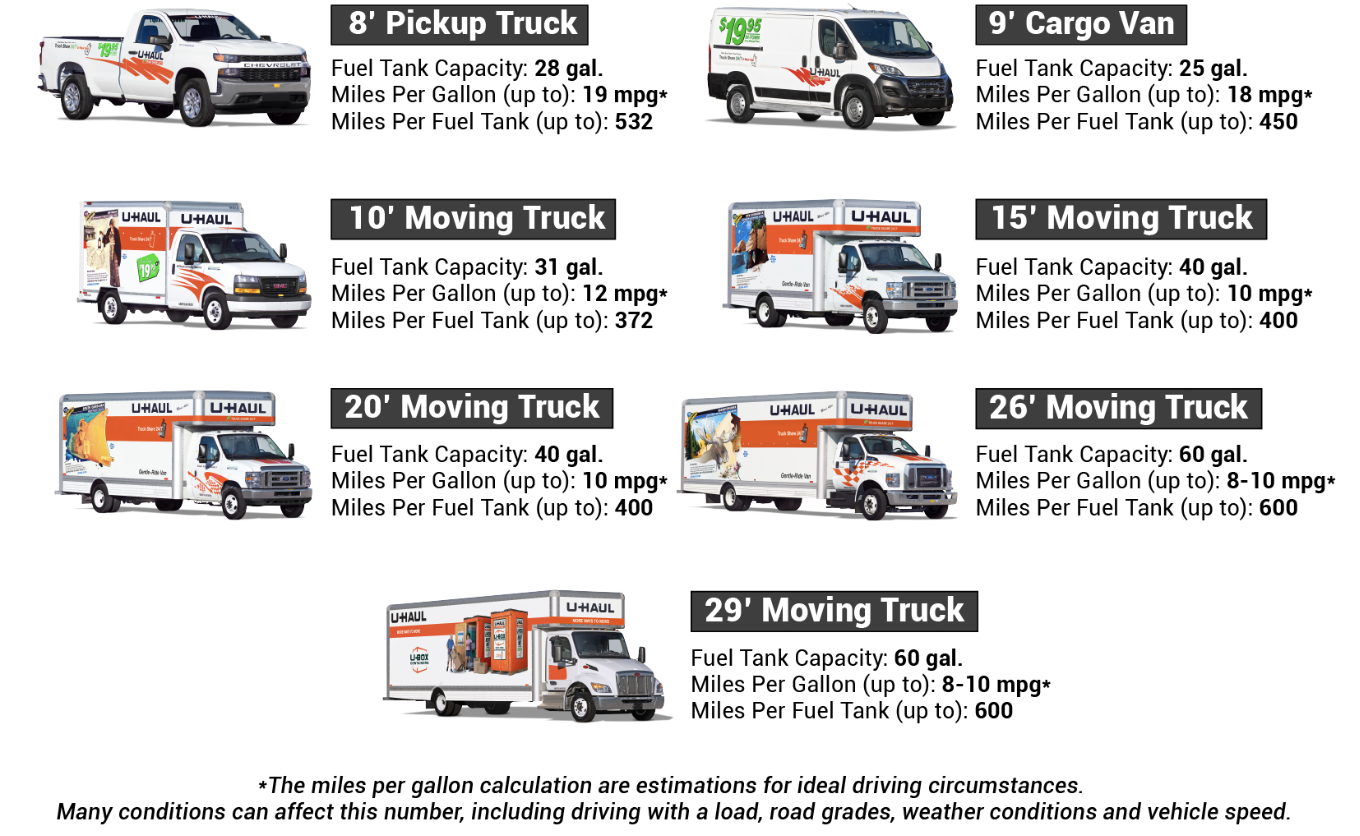
U-Haul offers pickup trucks, cargo vans, and moving trucks ranging from 10-foot to 26-foot, making it easier to choose the right size and avoid paying for unnecessary fuel. We recommend choosing a truck based on the size of your home and the amount of belongings you're moving. For example, a 26-foot moving truck can accommodate the contents of a three-to-four-bedroom home.
At U-Haul, we maintain one of the newest rental fleets by cycling our cargo vans and pickup trucks every 12–24 months. These newer vehicles deliver an average of 18–19 MPG, helping customers save fuel for smaller moves. Our moving box trucks average 8–12 MPG, with fuel economy varying with truck size, load weight, terrain, weather, and driving conditions.
In addition to choosing the right truck size, U-Haul trucks are engineered with fuel efficiency in mind. Many models feature a built-in fuel economy gauge that helps encourage fuel-efficient driving by allowing you to keep the indicator in the green zone. The fleet also includes aerodynamic features such as patented high-visibility mirrors, advanced chassis side skirts, a low-profile design, and rounded cargo box corners that help reduce wind resistance and improve fuel efficiency. Before every rental, U-Haul also inspects each truck, including checking the tire pressure, to help maximize performance and fuel efficiency throughout your move.
What U-Haul Truck Should I Get?
How To Choose The Right Size Moving Truck Rental
Several factors influence the right truck size for your move, including the size of your home, the number of boxes, and the distance you’ll be traveling. Considering these elements will ensure you select the right vehicle.
2. Load Your Truck Properly
How you load your moving truck can impact both fuel efficiency and driving performance. Packing heavy items inefficiently can use more gas, especially if you put most of the weight right above, or next to, an axle.
Start by placing heavier items toward the front of the cargo area, closest to the cab, and distribute weight evenly from side to side. Before loading, sort through your belongings, donating, recycling, or disposing of items you no longer need.
Need help loading your truck? Check out our guide on how to pack a moving truck to maximize space and improve weight distribution.
3. Drive at a Consistent Speed
When it comes to moving truck gas mileage, steady driving is your friend. According to the U.S. Department of Energy, fuel economy begins to decrease rapidly at speeds above 50 mph. The faster you drive, the harder the engine must work to overcome wind resistance, especially in larger vehicles like moving trucks.
If you’re driving a U-Haul moving truck, take advantage of the built-in fuel economy gauge. This feature is designed to help you develop fuel-efficient driving habits by showing how your driving affects fuel consumption. Keeping the gauge in the green zone can help reduce gas usage and lower your overall fuel costs.
Maintaining a consistent speed whenever possible also improves safety. Driving at excessive speeds increases stopping distance, especially in a fully loaded moving truck, making it more difficult to brake quickly when needed.
4. Avoid Excessive Idling
A moving truck burns fuel even when it's sitting still. While short stops are unavoidable, try to avoid extended periods of idling whenever possible. If you're taking a longer break, waiting for assistance, or stopping for a meal, turning off the engine will always conserve fuel.
Did you know, according to the U.S. Environmental Protection Agency, idling for just 10 seconds uses more fuel and produces more CO2 than turning the vehicle off and on again.
5. Plan Your Route Ahead of Time
Before you leave, review your route and look for ways to avoid heavy traffic, construction zones, or unnecessary detours. Check out the U-Haul App's Trip Planner tool to map out your trip and stay on course throughout your move. Download the U-Haul App to access Trip Planner, your reservation details, and moving resources all in one place.


6. Tow Smart
If you're towing a vehicle behind your moving truck, fuel consumption will naturally increase because of the additional weight and aerodynamic drag. However, proper towing techniques can help minimize the impact on fuel economy and reduce strain on your equipment.
Turn off Tow/Haul mode when you're not towing. U-Haul moving trucks are equipped with a Tow/Haul feature to improve performance when towing a trailer or vehicle. If you're not towing, make sure Tow/Haul mode is turned off to help improve fuel efficiency and reduce fuel costs.
Before you hit the road, verify that your towing equipment is securely connected and that all safety chains, straps, and lighting connections are properly attached.
While driving, accelerate gradually and maintain a steady speed whenever possible. Sudden acceleration, hard braking, and frequent speed changes force the engine to work harder and consume more fuel.
Leave extra following distance between your truck and the vehicle ahead so you can brake smoothly instead of making abrupt stops. When approaching hills, maintain momentum rather than accelerate aggressively at the base of the incline. These small adjustments can help improve fuel efficiency, reduce wear on your vehicle, and make towing safer throughout your trip.
Choose U-Haul Trucks for Fuel Efficiency
U-Haul trucks are engineered with fuel efficiency in mind to help customers save money at the pump. All U-Haul box trucks feature fuel economy gauges that help drivers identify efficient driving speeds. The fleet also includes design elements like low-profile heights, aerodynamic chassis skirts, and rounded corners that help reduce wind resistance.
Additionally, every truck is inspected before rental, including tire pressure checks, which can help support optimal fuel efficiency during your move.
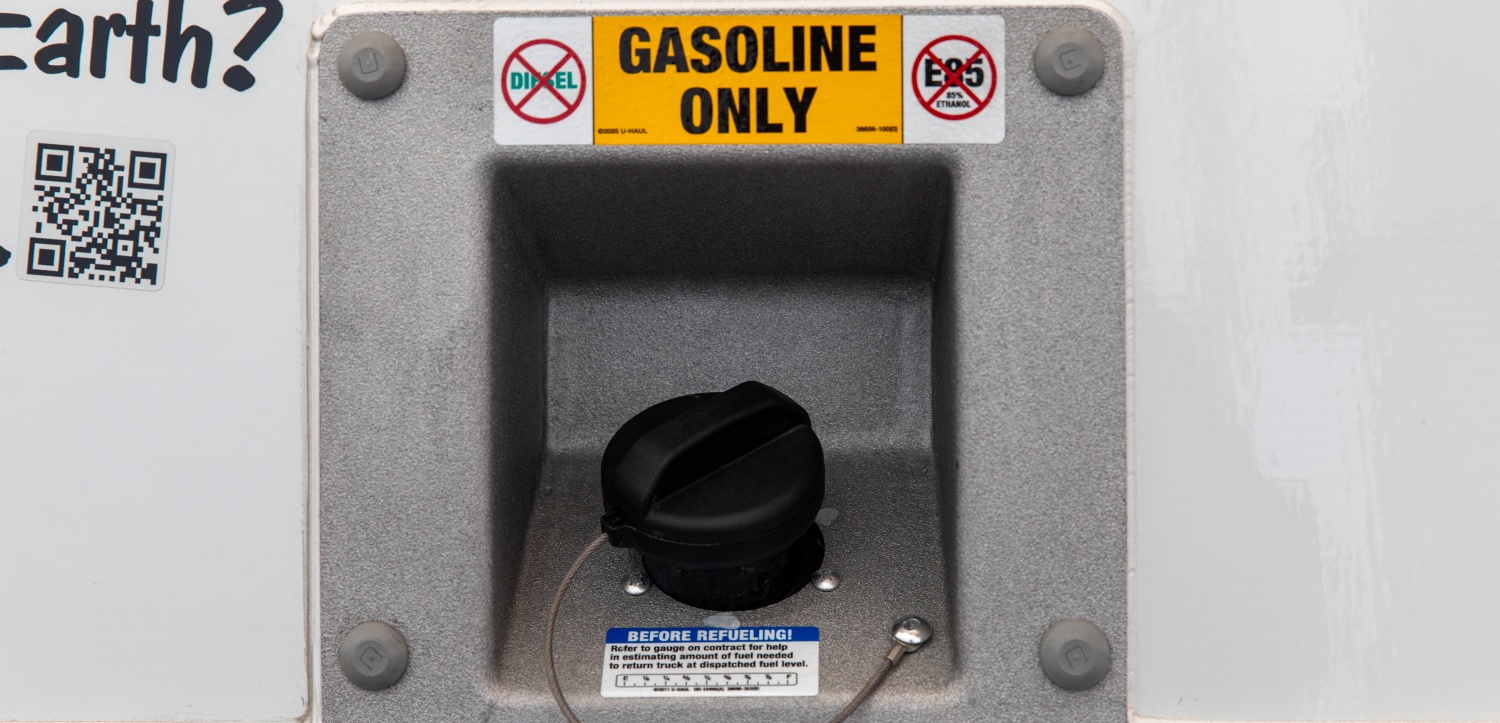
Another advantage is that the entire U-Haul moving truck fleet, including the 26-foot truck, uses unleaded gasoline. This helps customers avoid the higher fuel costs often associated with diesel-powered rental trucks while enjoying the convenience of refueling almost anywhere.
How Much Gas Do I Need To Put In a U-Haul Truck Before Bringing it Back?
How To Estimate How Much Fuel Is Needed Before Returning A Moving Truck
Everything you need to know about fuel options and avoiding extra fees.
Every gallon you save helps lower the overall cost of your move. A few simple driving habits can make a noticeable difference, especially on longer trips. With a range of truck sizes available, U-Haul makes it easier to find a vehicle that fits your move, helping you avoid hauling unnecessary weight or space that could impact fuel efficiency.
Frequently Asked Questions
How many miles per gallon does a moving truck get?
Most moving trucks average between 8–12 MPG, while cargo vans and pickup trucks may achieve 18-19 MPG depending on load size, terrain, and driving conditions.
Do U-Haul trucks use diesel fuel?
No. U-Haul moving trucks, including the 26-foot truck, use unleaded gasoline, making refueling simpler and often less expensive than diesel-powered alternatives.
Does driving at a lower speed save gas in a moving truck?
Yes. Driving at a low and steady speed can improve fuel efficiency because it reduces engine strain and wind resistance. U-Haul trucks also feature a fuel economy gauge to help encourage fuel-efficient driving habits.
Should I fill a moving truck with premium gasoline?
No. U-Haul moving trucks are designed to use regular unleaded gasoline, so premium is not necessary.
Does towing reduce a moving truck’s MPG?
Towing does reduce a moving truck’s MPG. It is because it increases weight and aerodynamic drag, which lowers the fuel economy.
Why do loaded moving trucks use more fuel?
Loaded moving trucks use more fuel because the engine works harder to move additional weight. Recommending to pack efficiently and avoid unnecessary items can help improve fuel efficiency.