


National treasure
Courtesy of USDA Forest Service.
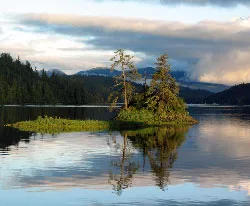
Located in the midlatitudes between the Arctic Circle and the Tropic of Cancer, temperate rain forests receive more than 50'' of rainfall each year! Characterized by mild, wet winters and cool, foggy and cloud-covered summers, the climate sustains diverse plant and animal life forms that survive the mild coastal winters. Under forests whose overstories are composed of spruce, hemlock and red and yellow cedar, massive amounts of organic matter decompose and accumulate.
Courtesy of USDA Forest Service.
Temperate rain forests are composed of trees at different stages of growth, varying from tiny seedlings to extremely oversized trees that have been standing for hundreds of years. Some areas of the forest will be young, as patches of trees may be blown down in large wind events or may have been harvested to provide wood for houses or musical instruments. Trees in these areas grow quickly; over time, they reach the size and stature of the original forest trees.
The Emerald Forest
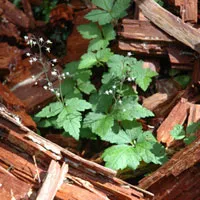
Courtesy of USDA Forest Service.
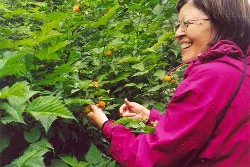
Many centuries of decay and rebirth support life on the forest floor, within a few inches of the floor, in the taller shrub layers and at mid-to-upper canopy within the trees. Sunlight seeps through this canopy, allowing new herbs and shrubs to flourish on the sunnier, more open portions of forest floor. The Tongass is an emerald forest; moss and lichens cling to branches and trunks of trees, festooning the wood with multiple colors and textures. The temperate rain forest, located in Southeast Alaska's panhandle, is home to some of the world's largest and oldest red and yellow cedars, Sitka spruce and western hemlock. These conifers reproduce through cones, which hang like golden pendants off the topmost branches. The levels of precipitation contribute to the verdant character of the vegetation in this part of Alaska.