



FAQ
What is a coral? Is it a plant or an animal?
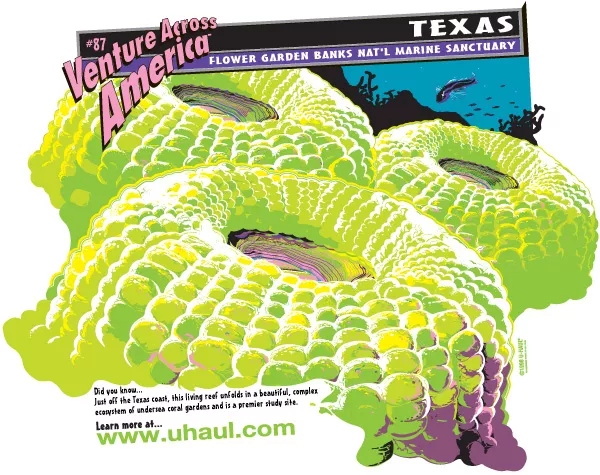
A coral is an animal. A coral animal is called a polyp. Most species are less than one inch wide. Related to jellyfish and sea anemones, their soft bodies resemble a double-walled balloon. The polyps of hard corals are encased in a limestone skeleton that is open at the top. Coral animals are stuck in one place, like plants. In fact it wasn't until the 18th century that they were correctly classified as animals.
Are there different types of coral?
Yes, there are three basic types of corals: stony corals, soft corals and Gorgonians.
Why are there no sea fans, and so few of the other soft corals?
No one knows for certain. The conditions are OK for these species; they just don't appear. Scientists believe the Flower Gardens originated from Mexico reefs when coral planulae (baby corals) were swept through the Gulf of Mexico by currents to settle on the banks. One theory is that the soft coral planulae may not survive the long trip up from Mexico, so these species were never established at the Flower Gardens.
Why doesn't the sanctuary introduce these species to the Flower Gardens, if the conditions are right for their survival? Wouldn't that increase the biodiversity?
It may increase the biodiversity. Then again, it may not. The Flower Gardens currently exhibit a good balance of species. All levels of the food chain are represented and all the species appear to be maintaining a healthy balance. If we were to introduce a new species deliberately, it could upset this balance, causing the loss or decline of other species.
How are coral reefs formed?
Located in warm, shallow seas, coral reefs are enormous, rocklike structures, but unlike mountains, deserts, and most other natural landscapes, a coral reef does not consist of rock and soil. Instead it is a huge city built by stony coral polyps. Each polyp uses minerals from seawater to build a limestone skeleton, which cements it to the seafloor. Polyps, like people, live close together in colonies. As polyps grow, they move up to build new skeletons on top of the old. And very slowly, over many years, the reef grows with them. Some colonies contain millions of individual polyps.
Is there more than one type of coral reef?
Coral reefs are generally defined by their overall structure and the geological conditions under which they evolved. No two coral reefs are alike, but most marine scientists agree that there are five basic types: fringing reefs, barrier reefs, atolls, bank reefs and patch reefs.
What type of coral reef is the Flower Garden Banks?
The Flower Garden Banks is a bank reef.
What other types of plant and animals can you find at the Flower Gardens?
The Flower Gardens are home to at least 80 species of algae, 253 known macroinvertebrate species, and more than 175 fish species. The Gardens are significant habitats for lobster, snapper and grouper. Manta Rays, great barracudas, loggerhead, turtles are frequent visitors to sanctuary waters (hawksbill, and leatherback turtle sightings are rare); whale sharks, the largest fish in the sea reaching lengths of 60 feet, are sometimes seen. Sponge communities are also present in the Flower Gardens and dominant at Stetson Bank.
Why do hammerhead sharks school around the Flower Garden Banks every winter?
No one knows for certain. There are several theories under consideration, but no conclusive evidence has been collected to support any of them, to date.
Where do the Flower Gardens turtles come from?
No one knows the answer to that question either! Hopefully, the turtle-tracking project will provide an answer eventually.
Can people come to see the Flower Garden Banks?
Yes. In fact, it is estimated that the Flower Gardens attract 3,000 SCUBA divers annually. Scuba Diving Magazine has ranked the Flower Gardens among the top ten overall dive destinations in North America. Recreational divers wanting to explore the Gardens must travel 7-8 hours by boat to reach it. The sanctuary does not sponsor recreational dive trips. However, you can contact the sanctuary office to obtain a list of current commercial operators.