The Complete Guide to Selecting a Trailer Hitch
Last Updated:
Are you looking to add a trailer hitch to your car, truck, van, or SUV? A lot goes into installing a trailer hitch, so the experts at U-Haul created this guide to help. We’ll walk you through trailer hitch types, hitch receiver sizes, and hitch classes so that you can make your choice with confidence.
What is a Trailer Hitch?
A trailer hitch is a piece of towing equipment installed under compact cars, midsize vehicles, crossovers, full-size SUVs, minivans, full-size vans, and pickup trucks for the purpose of towing trailers, campers, RVs, boats, and other vehicles. A trailer hitch can also be used for hitch-mounted accessories like bike racks and cargo carriers.
The type of vehicle you have plays a major role in determining which hitch options are suitable and how much weight you can tow.
What Are the Different Types of Trailer Hitches?
The most common hitch is a receiver hitch, which is installed at the rear of the vehicle.
There are three main types of trailer hitches:
- Receiver hitches: The most common option for everyday towing and hitch-mounted accessories
- 5th wheel hitches: Heavy-duty hitches mounted to brackets in the bed of a pickup truck to tow an RV
- Gooseneck hitches: Heavy-duty hitches installed underneath a pickup truck with a hitch ball poking through the bed to tow commercial or agricultural trailers
Receiver hitches are divided into five classes, while 5th wheel and gooseneck hitches are designed specifically for heavy-duty towing applications. Read on to learn about the five classes of receiver hitches.
Can You Put a Trailer Hitch on Any Vehicle?
If U-Haul can’t put a hitch on your vehicle, then nobody can! To see if your vehicle can have a hitch installed, go to uhaulhitches.com and input your vehicle’s year, make, and model. We’ll show you a full selection of trailer hitches and towing accessories that are compatible with your vehicle, including our Hitch Pros’ recommendations. In some cases, a trailer hitch for your specific vehicle may not exist yet, but don’t worry! The experts at U-Haul can design a first-of-its-kind hitch for your vehicle through the U-Haul custom trailer hitch program.
What Else Should I Get with a Trailer Hitch?
When getting a new trailer hitch, we also recommend a ball mount, a hitch ball, a safety pin and clip, and trailer wiring. These are all essential components for towing, and trailer wiring is legally required when towing.
Essential Towing Guides
How Do You Choose the Right Trailer Hitch?
U-Haul makes it easy to choose the right trailer hitch with our digital hitch finder. Simply go to uhaulhitches.com and enter your vehicle’s year, make, and model to see the recommended hitch and towing accessories for your vehicle. You’ll be able to choose from a couple of different hitches that are compatible with your vehicle, so it’s important to know how much you plan to tow so that you can select a hitch with a suitable capacity. If you already own a hitch accessory like a bike rack or cargo carrier, then you should also aim for a hitch receiver size that’s compatible with your accessory.
Matching your towing plans to your vehicle’s hitch class helps maximize your vehicle’s capability while keeping you safer on the road. If you need help, refer to the graphic below. For instance, if you have a compact car and only need to tow up to 2,000 lbs, then a light-duty (or Class 1 hitch) is for you.
Light-Duty Receiver Hitches (Class 1 Trailer Hitches) 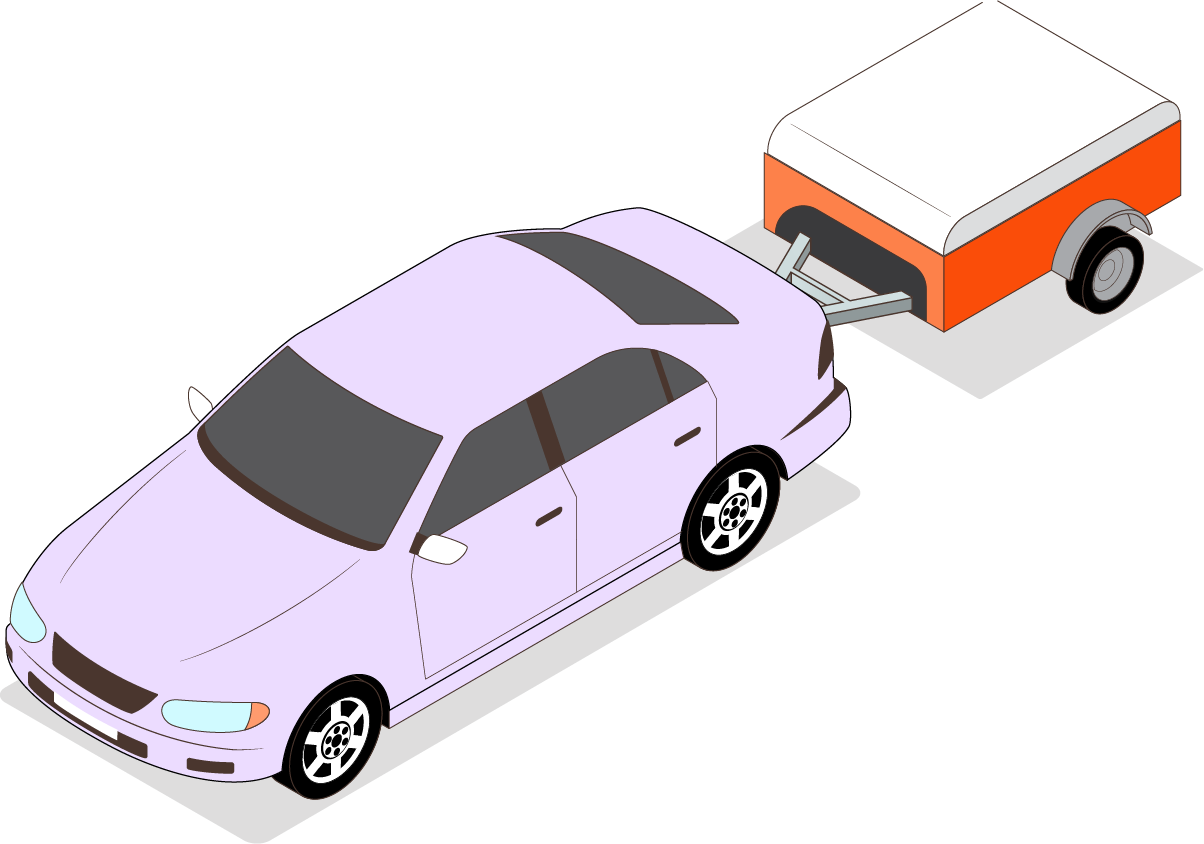
Light-duty receiver hitches are used to tow smaller utility or enclosed cargo trailers and motorcycle trailers, and they can also be used to mount bike racks or cargo carriers. These hitches can handle a maximum gross trailer weight of up to 2,000 lbs. The vehicle commonly associated with this specific type of hitch receiver is a compact car or midsize sedan.
Receiver and Capacity:
- 1-1/4" hitch receiver
- Gross trailer weight capacity up to 2,000 lbs
- Tongue weight capacity up to 200 lbs
Medium-Duty Receiver Hitches (Class 2 Trailer Hitches)
A medium-duty receiver hitch can tow up to 3,500 lbs and has a tongue weight of 350 lbs. Common vehicles with Class 2 hitches include midsize cars, minivans, small pickup trucks, and midsize SUVs. These medium-duty hitches can be used to tow smaller trailers and mount accessories just like a Class 1 hitch, but they can also tow small fishing boats, ATVs, and cargo trailers up to 12 feet in length. Additionally, a medium-duty trailer hitch receiver is bolted onto the frame of the towing vehicle.
Receiver and Capacity:
- 1-1/4" hitch receiver
- Gross trailer weight capacity up to 3,500 lbs
- Tongue weight capacity up to 350 lbs
Heavy-Duty Receiver Hitches (Class 3 Trailer Hitches) 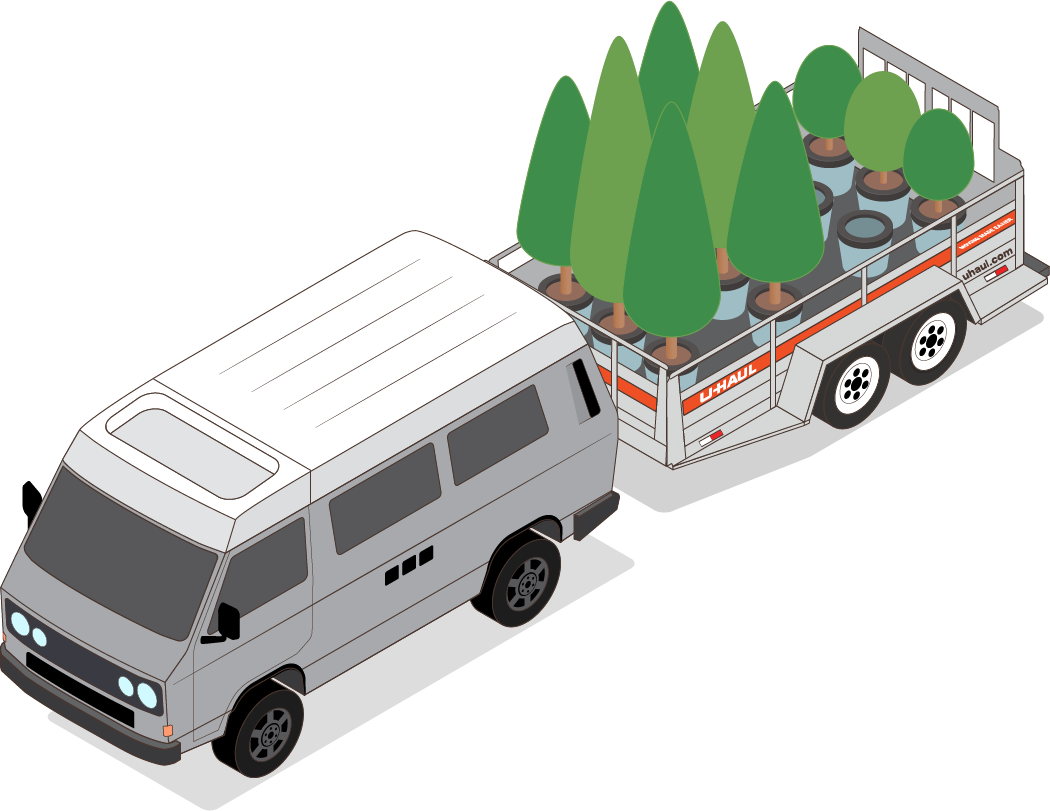
A heavy-duty receiver hitch is attached to the frame of the vehicle and considered an 'undercar' receiver hitch. Heavy-duty trailer hitches are designed to tow up to 7,500 lbs of weight. These Class 3 hitches also have a removable drawbar that is attached to the frame of the vehicle. Alongside the capability to mount a bike rack or cargo carrier, almost any type of vehicle can be towed with this style of hitch, including mid-to-large-size SUVs, vans, full-size cars, and pickup trucks.
Receiver and Capacity:
- 2" hitch receiver
- Gross trailer weight capacity up to 7,500 lbs
- Tongue weight capacity up to 750 lbs
Super-Duty Receiver Hitches (Class 4 Trailer Hitches)
Full-size pickups and SUVs can make use of trailer hitches with a much larger weight capacity for the purpose of towing travel trailers, heavier machinery, and boats larger than 24 feet. These Class 4 trailer hitches have a tow capacity rating of up to 10,000 lbs and a tongue weight capacity of up to 1,000 lbs.
Receiver and Capacity:
- 2" hitch receiver
- Gross trailer weight capacity up to 10,000 lbs
- Tongue weight capacity up to 1,000 lbs
Commercial-Duty or Extra-Heavy-Duty Receiver Hitches (Class 5 Trailer Hitches) 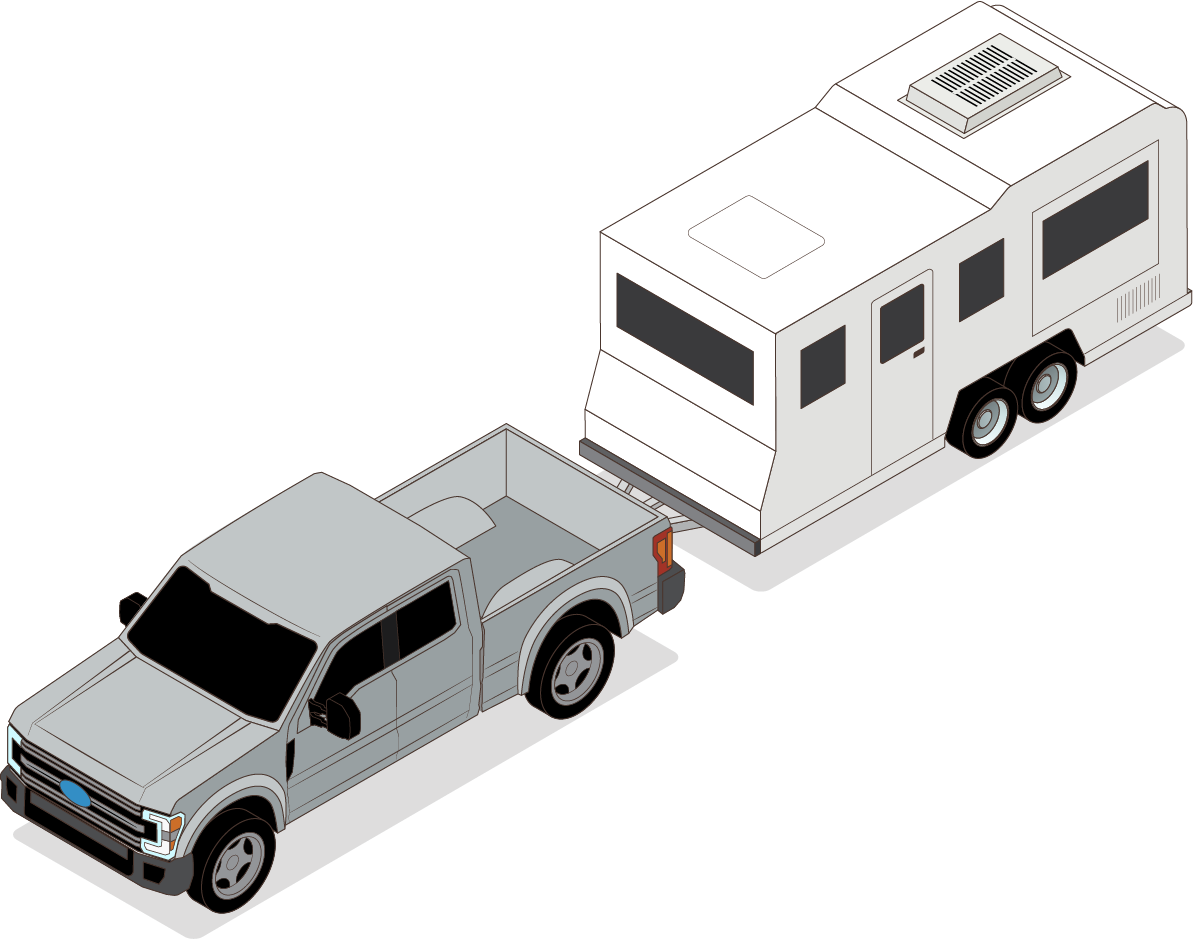
Commercial-duty receiver hitches are the highest class of standard trailer hitches. Pickup trucks, dually trucks, chassis cab trucks, and SUVs can all use this heavy-duty receiver for heavier jobs. These hitches can haul just about anything, allowing you to tow campers, RVs, and heavy commercial equipment up to 20,000 lbs. It’s also recommended that Class 5 hitches have weight-distribution systems (sway bars) for a safer towing experience.
Receiver and Capacity
- 2" and 2.5” hitch receivers
- Gross trailer weight capacity up to 20,000 lbs
- Tongue weight capacity up to 2,700 lbs
5th Wheel Hitches
5th wheel trailer hitches are specifically designed for pickup or flatbed trucks that have up to 30,000 lbs of towing capacity. The 5th wheel hitch mounts to brackets in the bed of a truck and has a plate similar to a semi-truck where you attach an RV or trailer.
What is the Average Cost of a Trailer Hitch?
The cost of a trailer hitch varies based on your vehicle and the accessories you get. On average, hitch installations can cost anywhere between $180 and $550 based on the price of each part and availability. Specifically, the cost of a hitch itself ranges between $100 and $300, towing accessories typically cost between $30 and $50, and installation labor costs between $50 and $200, though some specialty hitches with unique features will demand more labor time (and therefore cost more).
All trailer hitches sold and installed at a U-Haul Moving Center come with the option of a lifetime warranty plan that guarantees the replacement (including labor cost) of your hitch for any reason with no limitation on damages, including collision, corrosion, accidental overload, jackknifing, and vehicle theft. We also offer a wiring service plan that guarantees the repair and replacement (including parts and labor) of your wiring for any reasons including collision, corrosion, accidental handling, or damage for up to two years.
Do you have more questions? Call 1-800-GO-U-HAUL or chat with a trailer hitch specialist to ensure that you’re towing safely.
Frequently Asked Questions about Trailer Hitches
What is the standard hitch receiver size?
The most common receiver sizes are 1¼-inch and 2-inch, but your receiver size will depend on your vehicle and its hitch class.
Do I need trailer wiring?
Trailer wiring is legally required when towing a trailer so that brake lights, running lights, and turn signals function properly.
What is the difference between a hitch and a receiver?
The hitch is the entire towing unit that is attached to the rear of your vehicle. The receiver is the square opening that accessories or ball mounts slide into.
Can U-Haul install a trailer hitch?
Yes! U-Haul offers professional trailer hitch installation and towing components for most vehicles at over 1,500 locations across the U.S. and Canada.