


Amazing ammunition
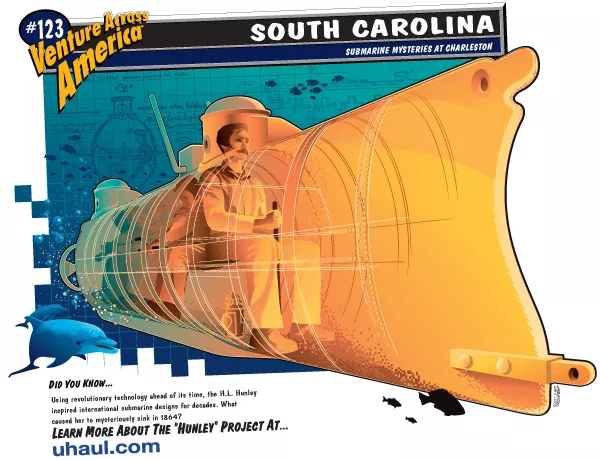
When the Hunley was originally designed, it was thought that the best model for the sub's torpedo would be a percussion torpedo dragged behind the sub. For the torpedo to successfully perform its intended function, the Hunley would have to dive below the target and tow the floating torpedo into the enemy ship. However, this idea proved to be too dangerous for the Hunley and her crew once the submarine was moved to South Carolina. The smooth waters of Mobile worked well for the torpedo, however, the choppy Charleston, South Carolina waters made a floating cylinder filled with 90 pounds of explosives too big of a danger. The submarine had to be modified for its new environment in Charleston.
Because of a lack of historical documents, the next torpedo design, while much more effective, became one of the great mysteries that surrounded the Hunley. All that was known was that a long spar was attached to the bow of the sub and that a torpedo outfitted with a barb sat at its end. Although there are differing theories on the operations of the torpedo spar, the most popular theory is that the spar would ram a hole into the side of the target vessel and then reverse, leaving the torpedo behind, inside the vessel. A line attached to the torpedo would spool out as the sub reversed, allowing sufficient buffer space between the two vessels before a line detonated the warhead.