How to Safely Load a Storage Unit to Maximize Space
Last Updated:
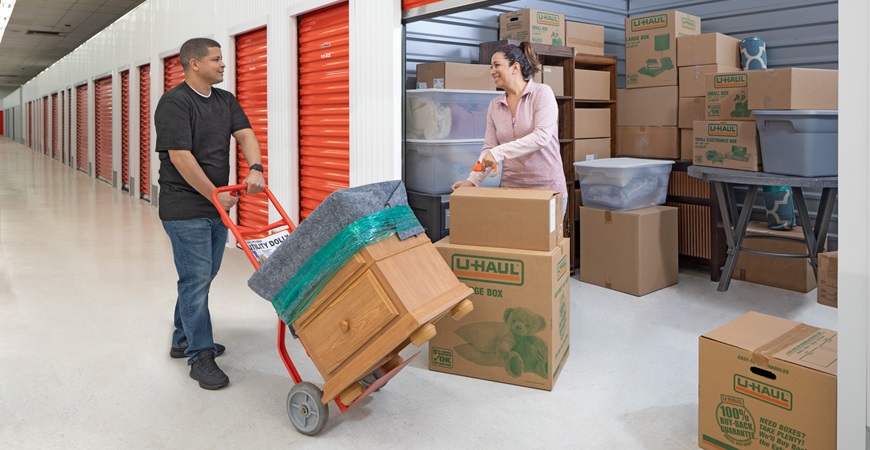
Much like packing a moving truck, loading a self-storage unit takes a little planning and technique. The goal is to maximize the available space while keeping your belongings protected and maintaining easy access to your items for when you need them.
If you're staring at a pile of boxes and furniture and wondering where to start, don't worry. This guide walks you through how to load a storage unit efficiently, from planning your layout to stacking boxes safely. If you'd rather have an extra set of hands for the heavy lifting, you can hire labor-only help through the Moving Help® Marketplace.
1. Pack With a Plan
Before you start loading your storage unit, make a plan for where everything will go.
Start by sorting your items by how often you’ll need them. Pack your least-used items in the back and your most-used near the front. That way, when it’s time to grab those holiday decorations out of storage, you won’t have to unload half of your unit to find them.
A few other ways to prepare:
- Label boxes on at least two sides so you can easily identify them.
- Create a digital or printed inventory of your boxes and their contents.
- Sketch a rough layout of your storage unit before you start loading.
2. Work From the Outside In
Be sure to place your larger, bulkier items in the unit first along the walls. Appliances, furniture, and other large pieces should be prioritized during this initial step.
Working from the outside in also helps you visualize how much useable space you have left as you load for your smaller items. If you're hiring help through the Moving Help Marketplace, your Service Provider can handle the physical loading aspect while you focus on directing where items should go.
3. Disassemble Furniture
Disassemble your larger furniture pieces wherever possible before putting them into storage to maximize available storage space. Removing legs from couches and kitchen tables, disassembling bed frames entirely, removing couch cushions and wrapping them in stretch plastic wrap, and separating sectional couches will decrease your furniture’s “footprint” and give you more space for boxes and storage bins.
4. Stack Efficiently
When stacking boxes, always stack from heavy to light. This will ensure your stacks don’t collapse or crush the items on the bottom of the pile. It’s a simple step that will keep your belongings safe.
This strategy also can be applied when packing your boxes — be sure to pack your heavier items on the bottom of your moving boxes, then fill the remaining space with lighter items and void fill to prevent shifting. Don’t forget to pack heavier items in smaller boxes and lighter items in larger boxes to avoid oversized loads and unsafe storage conditions.
5. Cube Out Moving Boxes
It may be tempting to use whatever boxes you can find laying around, but you’ll be better off using a uniform set of moving boxes when it comes to packing.
Moving boxes — like U-Haul moving boxes for example — are designed to stack together and fill out a moving truck or storage unit perfectly. That means they stack in more consistent rows and make better use of your available space.
6. Utilize Vertical Space
Once you've filled the floor space, look up. You can use vertical space by stacking belongings and safely making use of the height of your storage unit.
In addition to the stacking methods mentioned above, consider adding freestanding shelves for additional vertical spacing. This will allow you to create space on the floor, pack oddly shaped items vertically, and retrieve items more easily.
If you have tables, desks, sofas, or other large, flat furniture, you also can stack boxes on top of these items for even more consolidation. Just make sure your stacks remain stable and aren't too tall or top-heavy.
Pro Tip: If you're not comfortable lifting or stacking heavier items, this is another instance where labor-only help can come in handy. Moving Help Service Providers can assist with the physical work of loading and unloading your storage unit.
7. Leave an Aisle for Easy Access
Remember not to pack your storage unit so tightly that you can’t reach anything in the back.
As you load your unit, leave an aisle down the middle — about one or two feet wide — so you can easily walk in and access your stored items. You also may want to leave additional space around frequently accessed items.
8. Hire Professional Loaders
Loading a storage unit can be plenty of work, especially when you're dealing with bulky furniture, heavy boxes, and appliances.
You don't have to do it all yourself. The Moving Help Marketplace connects customers with independent local Service Providers who offer labor-only moving services, including loading and unloading. You can hire help for the physical work while you stay in control of your storage plan.
Whether you need help loading the entire unit or just need an extra hand with heavy furniture, you can find Service Providers through the Marketplace who offer the services you need for a low hourly rate.
Ready to Load Your Storage Unit?
A good storage plan starts with knowing what you're storing, where it should go, and what you'll need to access later. Once you have a plan, take your time and load your unit in a way that keeps your belongings organized and accessible.
If you'd rather spend less time lifting and more time getting the rest of your move done, consider hiring labor-only help through the Moving Help Marketplace.
Get a quote for Moving Help today.