




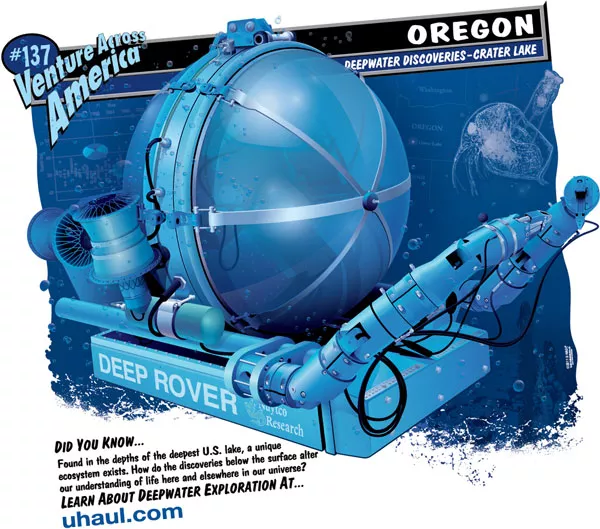
Crater Lake National Park
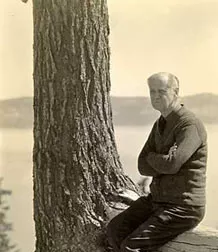
Courtesy of NPS Historic Photograph Collection
William Gladstone Steel worked for 17 years to convince Congress that a national park should be created to protect Crater Lake. He finally succeeded and the park was authorized on May 22, 1902.
Prior to the first time he explored the depths of Crater Lake with the USGS in 1886, William Gladstone Steel had actually been intrigued by it for more than 16 years. Back in 1870, as a young man living in Kansas, Steel sat down one day to eat lunch, which he had wrapped up in an old newspaper. As he sat there eating, he read an article about an unusual lake in Oregon, which sparked his imagination. At that moment, he vowed that he would see this unusual lake for himself one day. Two years later, Steel and his family moved from Kansas to Portland, Oregon, and 13 years later he finally had the opportunity to see Crater Lake. Steel was so moved by its pristine beauty that he decided Crater Lake should be preserved forever as a public park so future generations could have the pleasure of seeing the lake. That moment was when Steel began his 17-year quest to see Crater Lake be established as a national park.
Steel's initial proposal to create a national park was met with arguments and anger. However, a conservation movement during the late 1800s aided Steel's efforts to promote awareness in preserving natural areas. In 1893, Crater Lake received some protection as part of the Cascade Range Forest Reserve but, for Steel, that was not good enough. He continued to push for national park status, and because of his dedicated efforts and determination, President Theodore Roosevelt named Crater Lake a national park on May 22, 1902. Now, as one of America's oldest national parks, Steel's wish has been granted, as millions of people have had the pleasure of seeing the pristine, one-of-a-kind lake which has been a source of public enjoyment for more than 100 years now.